
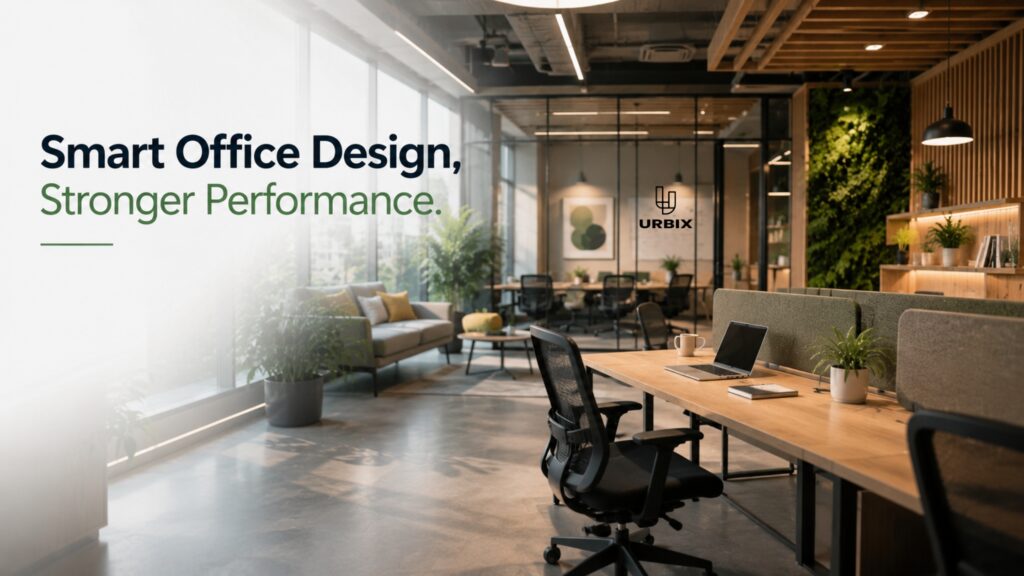
Most companies spend months debating hiring strategies, software tools, and management styles to boost productivity. Yet, the space their employees actually sit in every day gets almost no thought at all. It’s a strange blind spot, considering how much time people spend at their desks. The truth is, Office Interior Design isn’t just about looking presentable for clients who walk in it directly shapes how focused, comfortable, and motivated your team feels from nine to five. In this blog, we’ll break down the real connection between office layout and productivity, and what goes into designing a workspace that works for the people who use it every day.
What Is Office Interior Design and Why Does It Matter?
Office interior design is the process of planning and designing a workspace so that it supports how a business actually operates, not just how it looks in photos. This covers everything from layout and furniture selection to lighting, acoustics, and even the flow of movement between departments.
For most businesses, this falls under a broader category of Corporate Office Interior Design, where the goal isn’t just aesthetics but creating an environment that reflects the company’s culture while genuinely helping employees do their jobs better. A poorly planned office might look modern on the surface, but if people are constantly distracted, cramped, or uncomfortable, none of that visual appeal actually helps the business.
The Real Connection Between Office Layout and Employee Productivity
It’s easy to dismiss office design as a “nice to have,” but there’s a real, practical link between how a space is arranged and how people perform within it. Poor Office Layout Ideas think rows of identical desks with no separation, harsh overhead lighting, or a complete lack of quiet zones tend to increase stress and reduce focus over time, even if employees can’t always pinpoint why they feel drained by the end of the day.
On the other hand, a thoughtfully designed space reduces unnecessary friction. Employees spend less energy fighting distractions and more energy actually doing their work. It’s not about creating a flashy space; it’s about removing the small annoyances that quietly chip away at focus throughout an eight-hour workday.
Key points of a Productive Office Interior
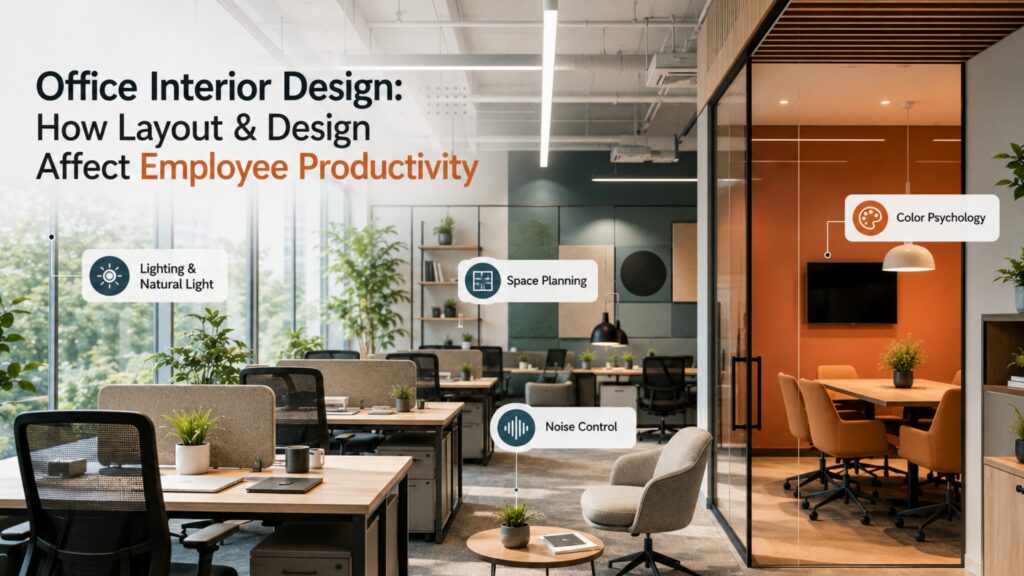
- Lighting and Natural Light
Lighting affects far more than visibility it influences mood, alertness, and even sleep quality outside of work hours. Offices that maximize natural light through open layouts near windows tend to see employees report higher energy levels and fewer complaints about fatigue compared to spaces relying entirely on artificial lighting.
- Space Planning and Desk Layout
This is where office space planning really comes into play. How desks are arranged, how much walking distance exists between teams, and whether there’s enough personal space around each workstation all affect how comfortably people can concentrate. Cramped layouts often lead to more interruptions simply because personal space feels invaded.
- Noise Control and Acoustics
Open offices have become popular for collaboration, but without proper acoustic planning, they can turn into a constant source of distraction. Simple solutions like sound-absorbing panels, designated quiet zones, and strategic furniture placement can make a noticeable difference in how well people can focus.
- Color Psychology in Office Design
Color choices in an office aren’t purely decorative. Cooler tones like blues and greens tend to support calm, focused work, while warmer accents can energize collaborative spaces like meeting rooms. Thoughtful Office Interior Design Ideas often use color deliberately to guide mood across different zones of the workplace.
Open Office vs Private Cabins: Which Layout Works Better?
This debate has been going on for years, and honestly, there’s no single right answer it depends on the nature of the work. Open office design encourages collaboration, faster communication, and a more connected team culture, which works well for creative teams, startups, and sales-driven environments.
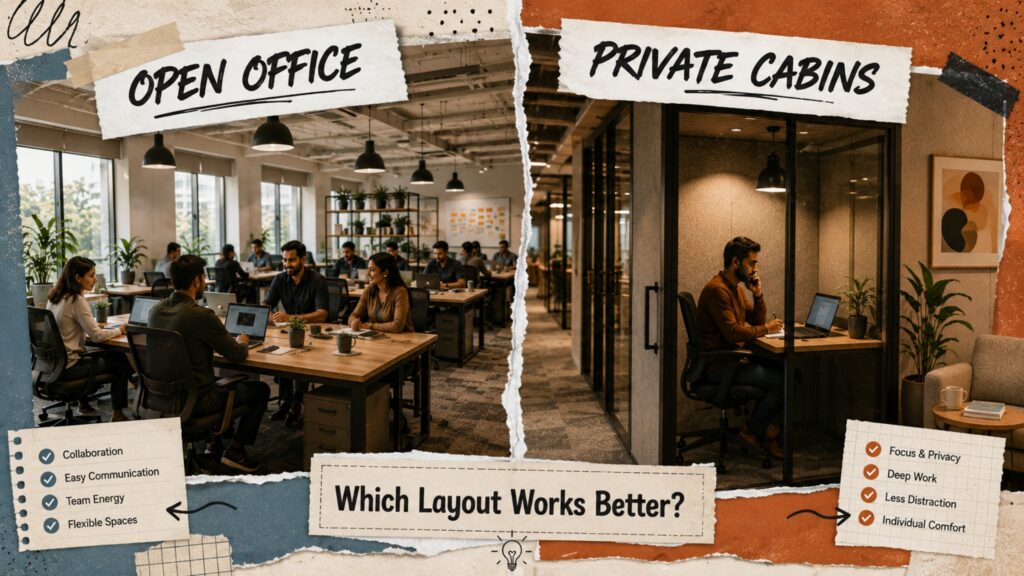
Private cabins, on the other hand, suit roles that require deep focus, confidentiality, or frequent calls, such as finance, legal, or senior management functions. Many modern offices are now moving toward a hybrid approach open areas for teamwork combined with private zones or phone booths for focused tasks, giving employees the flexibility to choose the environment that suits the work at hand.
Modern Office Interior Design Trends in Dubai
Modern Office Interior Design in Dubai has shifted noticeably over the past few years. Businesses are moving away from rigid, formal layouts toward spaces that feel more human and adaptable. Some trends shaping Office Interior Design in Dubai right now include biophilic elements like indoor plants and natural materials, smart technology integration for lighting and climate control, minimalist aesthetics that reduce visual clutter, and flexible zones that can shift between individual work and team collaboration depending on the day’s needs.
Dubai’s competitive business environment also means companies are increasingly using office design as a way to reflect their brand identity and make a strong impression on clients and potential hires alike.
Small Office Interior Design: Making the Most of Limited Space
Not every business has the luxury of a sprawling floor plan, and that’s where Small Office Interior Design becomes genuinely important. In compact spaces, every design decision carries more weight. Multi-functional furniture, vertical storage solutions, and light color palettes can make a small office feel considerably more open than it actually is.
The key is avoiding the temptation to fill every inch with furniture or décor. A smaller office that’s thoughtfully laid out with breathing room often feels far more productive than a larger space that’s cluttered and poorly planned.
How to Plan an Office Interior Design Project (Step-by-Step)
Getting Office Space Planning right involves a fairly structured process, even if the final result looks effortless. It usually starts with understanding how different teams actually work and move through the space day to day, followed by mapping out zones for focused work, collaboration, and relaxation. From there, furniture and material choices are made based on both function and brand identity, lighting and acoustics are planned around those zones, and finally, the space is tested and adjusted based on real employee feedback once it’s in use.
Skipping any of these steps is usually where offices go wrong a beautiful design that ignores how people actually work rarely holds up once the space is occupied.
Office Interior Design Cost in Dubai: What Affects the Price
Office Interior Design Cost in Dubai varies quite a bit depending on several factors. The size of the space plays an obvious role, but so does the complexity of the layout, the quality of materials chosen, and whether the project involves structural changes or just furnishing and finishing work. Custom furniture, premium lighting fixtures, and advanced acoustic solutions will naturally push costs higher compared to standard furnishing packages.
Businesses planning larger commercial spaces or multiple branches often find that working with a design partner from the early planning stage helps avoid costly changes later, since layout decisions made upfront tend to be far cheaper to implement than adjustments made after construction begins.
Why Choose Urbix for Your Office Interior Design
At Urbix, we understand that a well-designed office is about far more than appearances it’s about creating a space that genuinely supports how your team works. Our approach to Office Interior Design starts with understanding your business goals and workflow before a single design decision is made, ensuring the final space actually reflects how your company operates day to day.
As one of the leading names in Commercial Interior Designers in Dubai, our team combines functional space planning with thoughtful aesthetics, so your office doesn’t just look impressive to visitors it genuinely helps your employees do their best work.
Frequently Asked Questions Releted to Office Interior Design
1. Does office interior design really affect productivity, or is that overstated?
There’s a real, practical link. Poor lighting, cramped layouts, and constant noise genuinely wear people down over a workday, while a well-planned space reduces those small frictions that quietly affect focus and energy.
2. What’s the biggest mistake companies make with office design?
Designing purely for appearance without considering how teams actually work day to day. A visually striking office that ignores workflow often ends up frustrating employees rather than helping them.
3. Is open office design better than private cabins?
Neither is universally better it depends on the type of work. Collaborative teams often benefit from open layouts, while roles needing deep focus or privacy tend to perform better with private spaces or a hybrid setup.
4. How long does an office interior design project usually take?
This depends on the size and complexity of the space, but most projects move through planning, design development, and execution over several weeks to a few months for larger commercial spaces.
5. Can small offices still have a strong, productive design?
Absolutely. With the right space planning, multi-functional furniture, and thoughtful layout choices, even compact offices can feel open and support focused work effectively.
Final Thoughts
Office design isn’t just an aesthetic decision made once and forgotten it’s an ongoing factor in how your team feels and performs every single day. Whether you’re setting up a new office or rethinking an existing one, investing time into getting the layout, lighting, and overall flow right often pays off in ways that are hard to measure directly, but easy to notice once it’s done well